Friday, 30 December 2016

Clarification on withdrawal and acceptance of notice of Voluntary Retirement

Clarification on withdrawal and acceptance of notice of Voluntary Retirement

No.24012/04/2016-AIS (II)
Government of India,
Ministry of Personnel, Public Grievances and Pension
(Department of Personnel & Training)
AIS II(Pension)

North Block, New Delhi
Dated: 27/12/2016

To
All Chief Secretaries of States/UTs

Subject : Amendment of All India Service (Death Cum Retirement Benefits) Rules, 1958 in terms of the provisions in CCS(Pension) Rules, 1972.

Sir,
I am directed to state that this Department is proposing to insert provision for withdrawal and acceptance of notice of Voluntary Retirement in the All India Service (Death Cum Retirement Benefits) Rules, 1958 under Rules 16(2) as 16(2-B) and 16(2-C), as provided in the relevant rules of CCS(Pension) Rules, 1972 i.e. under Rule 48 & 48-A as under:

16(2-B) A notice of voluntary retirement given by a member of the service under subrule 2 and 2-A above, may be withdrawn by him, provided the request for such withdrawal shall be received within the intended date of his retirement by the Competent Authority.

16(2-C) Where a notice of voluntary retirement is given by a member of the service under sub-rule 2 above and the appointing authority does not refuse to grant the permission for retirement before the expiry of the period specified in the said notice, the retirement shall become effective from the date of expiry of the said period.

Provided that in cases, where no order is issued by the State Government, then after the expiry of the notice period, the Central Government may issue orders to give effect to this sub-rule.

2. All the State Governments/UTs are requested to convey their comments on the proposed amendments as required under Clause 3 of the AIS Act, 1951 latest 07/01/2017 positively. If no comments are received by the stipulated date, it would be assumed that the concerned States/UTs are in agreement with the proposed amendments.

Yours faithfully,
(Rajesh Kumar Yadav)
Under Secretary to Govt. of India

Read More ->>

NFPE felicitates Sri Ashutosh Tripathy, DG retiring on 31.12.2016

NFPE felicitates Sri Ashutosh Tripathy, DG retiring on 31.12.2016

FELICITATION OF SHRI ASHUTOSH TRIPATHI
DIRECTOR GENERAL DEPARTMENT OF POSTS
ON 30th DECEMBER-2016

            Shri Ashutosh Tripathi: Director General Department of Posts is going to retire on 31st December-2016.

            Felicitation was given by NFPE, Secretary General & President at Dak Bhawan today on 30th December-2016 and extended best wishes on behalf of NFPE for his happy, healthy and peaceful retired life.

            Shri Ashutosh Tripathi is an officer of positive approach and during his period  as Member(P) and DG, Post, so many problems of staff were  settled and  he never gave opportunity to staff  side to go on strike or on any  serious  agitational programmes. Whenever there was any problem in Circles also he invited NFPE leadership and settled.


            We as NFPE wish all the best for his retired life:


Read More ->>

SB Order No 15/2016 : Revision of Interest rates for Small Savings Schemes

SB Order No 15/2016 : Revision of Interest rates for Small Savings Schemes

SB Order No 15/2016 : Revision of Interest rates for Small Savings Schemes

No change in interest rate for the period from 01-01-2017 to 31-03-2017.

Read More ->>

Happy New Year 2017


Read More ->>

Cash withdrawal from ATMs – Enhancement of daily limits

Cash withdrawal from ATMs – Enhancement of daily limits

Cash withdrawal from ATMs – Enhancement of daily limits

RBI/2016-17/204
DCM (Plg) No. 2142/10.27.00/2016-17
December 30, 2016
The Chairman / Managing Director/ Chief Executive Officer,
Public Sector Banks/ Private Sector Banks / Foreign Banks/
Regional Rural Banks / Urban Cooperative Banks/ State Cooperative Banks
District central Cooperative Banks

Dear Sir,
Cash withdrawal from ATMs – Enhancement of daily limits

Please refer to our circular DCM (Plg) No. 1424/10.27.00/2016-17 dated November 25, 2016 on “Withdrawal of cash from bank deposit account - Relaxation”.

2. On a review of the position, the daily limit of withdrawal from ATMs has been increased (within the overall weekly limits specified) with effect from January 01, 2017, from the existing ₹ 2500/- to ₹ 4500/- per day per card. There is no change in weekly withdrawal limits. Such disbursals should predominantly be in the denomination of ₹ 500.

3. The relaxation of withdrawal limits as enabled by our circular DCM (Plg) No. 1437/10.27.00/2016-17 dated November 28, 2016 remains unchanged.

4. Please acknowledge receipt.

Yours faithfully,
(P Vijaya Kumar)
Chief General Manager
Read More ->>

Chief PMG Maharashtra Circle will hold additional charge of Chief PMG Karnataka Circle

Chief PMG Maharashtra Circle will hold additional charge of Chief PMG Karnataka Circle 


Read More ->>

Banks Continue to Face Significant Levels of Stress – RBI.

Banks Continue to Face Significant Levels of Stress – RBI.


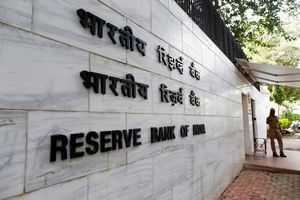
rbi
Banks in India, particularly state-run ones, continue to face significant levels of stress owing to bad loans, the RBI said on Thurdsay in its December 2016 Financial Stability Report (FSR).
“The business growth of scheduled commercial banks (SCBs) remained subdued with public sector banks (PSBs) continuing to lag behind their private sector peers. System level profit after tax (PAT) contracted on y-o-y basis in the first half of 2016-17,” it said.
The risk to Indian financial system in the six months to September rose amid deteriorating asset quality at banks and lenders with exposure to top business groups with stress could see a substantial portion of their profits blown off if their top three borrowers default.
Infrastructure, iron & steel, engineering and power sectors remain in stress as they are unable to generate cash and that may force banks to hold back from lending to even productive purposes, said the twice a year released RBI’s Financial Stability Report which discusses the strength of the system and also analyses how equipped the system is to withstand shocks.
“The banking stability indicator shows that the risks to the banking sector remained elevated due to continuous deterioration in asset quality , low profitability and liquidity,” said the report. “Given the higher levels of impairment, SCBs may remain risk averse in the near future as they clean up their balance sheets and their capital position may remain insufficient to support higher credit growth.“
India’s financial system, though withstood the shock of the global financial crisis of 2008, has deteriorated substantially as corporates binged on loan at cheap rates and banks threw caution to winds. That has resulted in record-high bad loans which has eroded their capital too.
“The asset quality related pressures in the banking system is likely to continue for some more time as recovery in current environment remains challenging,” says Karthik Srinivasan, group head, financial services sector ratings at ICRA. “With slowed credit offtake, the asset quality indicators in percentage terms will continue to deteriorate.”
The proportion of gross non-performing advances ratio of commercial banks rose to 9.1% from 7.8% between March and September 2016, pushing the overall stressed advances ratio to 12.3% from 11.5%. The report also points out that the special mention accounts (SMA)-2 ­ accounts where the loan is overdue for 60 days –increased across bank groups.
“While the domestic banking sector continues to face significant levels of stress partly reflecting legacy issues, on balance, enhanced transparency has helped to reinforce the stability of India’s financial system,“ RBI Governor Urjit Patel wrote in the report.
Stress tests on banks’ credit concentration risks, considering top individual borrowers according to their exposures, showed that the impact was significant for three banks, comprising about 3.9% of the assets, as they may fail to maintain 9% capital adequacy ratio in at least one of the scenarios, it said. The losses could be 37% of profit before tax under the scenario of a default by the topmost individual borrower and 59% in case the top two individual borrowers default.
The macro stress test shows that total bad loans of banks may increase further if macroeconomic conditions deteriorate sharply.
The stress test shows that government-owned banks may record the highest bad loans ratio and lowest capital to risk-weighted asset ratio among bank-groups although the CRAR at the system as well as bank-group levels may remain above the required regulatory minimum.
Source: yahoo


Read More ->>

7th Pay Commission – One Day Strike on 15th February 2017 – Notice Issued to the Cabinet Secretary on 29th Dec.

7th Pay Commission – One Day Strike on 15th February 2017 – Notice Issued to the Cabinet Secretary on 29th Dec.

7th pay commissionCentral Government employees and Pensioners betrayed by the central Government by breach of assurance given by Group of Cabinet Ministers including Shri Rajnath Singh, Shiri Arun Jaitely and Shri Suresh Prabhu regarding increase in Minimum Pay and Fitment formula. This 7th pay commission is the worst after 2nd CPC report in 1960. Government implemented the report without any modification suggested by Staff side (JCM). In 1960 entire employees went on five days strike.
Government betrayed Central Government employees and Pensioners by denying eligible 3% Dearness Allownace with effect from 01.07.2016. DA for pre-revised Minimum pay of 7000 is 7% = 490 per month. Same pre-revised pay of 7000 revised to 18000 after merger of 125% DA as on 01.01.2016. New DA granted for revised minimum pay of 18000 is 2% = 360 per month. Thus there is a recurring loss of Rs. 130/- per month in DA granted to Minimum pay. For other higher pay scales the loss is still higher.
Hence, the Central government employees and workers have yet again decided to go on a one-day strike commencing on February 15, 2017, against the promises made by the Union Cabinet for salary hike from January 1, 2017, as per the recommendation of 7th Pay Commission. The Confederation strike notice was sent to the Cabinet Secretary, Government of India, where it was mentioned that the demands are in pursuance of which employees and workers will render upon the one-day strike.
The demands are related to the recommendation made by the Centre under the 7th Pay Commission which stays intact and adjusted in the list sent to the government body dated as of 29 December 2016. It includes the demands raised by National Joint Council of Action where the modification had been submitted to the Cabinet Secretary on and before December 10, 2015. The following notice majorly emphasises upon ‘equal pay for equal work’ judgement made by the Supreme Court which was later on implied in the recommendation made in 7th Pay Commission.
The assurance was given to the central government employees by the Centre for an increase in the minimum wage, fitment factor, granting revised HRA at the existing percentage of 10%, 20% and 30%, accepting the proposal of transport allowance, along with settle all the previous anomalies as per the 7th pay commission recommendations. It also includes implementation of parity in pensions for pensioners before 2016, settles the pension-related issue, discontinues PFRDA Act and New Pension System (NPS) as well as granting family pension to those recruited after 1/1/2004.
Apart from this, financial upgradation and promotion on the category of ‘Good’ and ‘Very Good’ has been asked to be withdrawn along with abolishing Lower Division Clerk group as the wages given are minimal in amount. The central workers have also urged the Centre to provide cashless medical treatment to the permanent employees as well as the pensioners in leading government and private hospitals.
The union alleges, In the past, only one Committee before implementation of CPC report and one Anomaly Committed after implementation was constituted. This time Committee after Committees are constituted but no negotiated settlement with the JCM (NC) staff side on any of the issue, but only one-way hearing of the views of the staff side.
Implementation Committee, Empowered Committee, Allowances Committee, Pension (Option-1) Committee, Anomaly Committee, New Pension System (NPS) Committee and Senior officers Committee (?) to discuss the issues arising out of 7th CPC recommendations. (no formal orders constituting the Group of Senior Offices Committee and no terms of reference made public). Almost six months are over after Cabinet approving pay scales and one year is over after submission of 7th CPC report, but no outcome of any committee), they said.
No negotiated settlement on Confederation’s 21 Point Charter of demands which includes increase in minimum pay, Fitment formula, no reduction of HRA rate, Revision of all allownaces, Restoration of abolished Advances, Option-1 for pensioners, Scrap New Pension System, Autonomous bodies wage revision, GDS Issues, Casual Labour issues, MACP promotional hierarchy and “Very good” bench mark, filling up of vacancies, removal of 5% compassionate appointment restriction, Five promotions, LDC/UDC pay upgradation, Parity in pay scales with Central Secretariat Staff, removal of CCL adverse condition, equal pay for equal work etc, they added.
The respective notice has been issued to the Cabinet Secretary and will take the matter in hands from January 1, 2017, as per the stated rules set by the Government of India. As of now, no verdict or response has been recorded from the Union Cabinet on this matter.
Source: fabnewz


Read More ->>

RBI Instructions to Post Office/Bank Branches on Deposit Old currency notes into banks on 31Dec2016

Important : RBI Instructions to Post Office/Bank Branches on Deposit Old currency notes into banks on 31Dec2016

Closure of the scheme of exchange of Specified Bank Notes(SBN) at banks on December 30th 2016
In continuation of trailing mails, please find attached the RBI notification no. DCM (Plg) No.2103/10.27.00/2016-17 dated December 30, 2016 regarding closure of the scheme of exchange of Specified Bank Notes (SBNs) at banks on December 30th 2016. In this connection, following instructions are issued:

1. All Circle/Regional Level control rooms to continue till further orders. 
2. With the closure of the facility of deposit of SBNs (WOS banknotes) as at the close of business on December 30, 2016, all Circles should submit a consolidated report (from 10.11.2016 to 30.12.206)in Annexure 3D in addition to the daily reports of today (30.12.2016), to control Room Directorate.
3. The Post Offices which are linked to the Bank Branches having currency chest should deposit SBNs/WOS banknotes by December 31, 2016.
4. SBNs (WOS banknotes) cannot form part of Post Offices cash balances from the close of business as on December 31, 2016.
5. Necessary action may be taken to deposit WOS banknotes today itself in linked banks.

With regards,

Sachin Kishore
Director (CBS)

Read More ->>