Wednesday, 28 February 2018

New Blue Coloured Aadhaar Card Launched: How To Apply And Other Key Details

New Blue Coloured Aadhaar Card Launched: How To Apply And Other Key Details

A child's blue coloured 'Baal Aadhaar' card data does not include biometrics information (through fingerprint and iris scans), according to the UIDAI.

The Unique Identification Authority of India (UIDAI) has recently launched a new blue coloured Aadhaar card or ‘Baal Aadhaar’ card for children aged below five years. For enrolling a child for ‘Baal Aadhaar’ card, the child’s birth certificate and the Aadhaar card number of one of the parents is required, said UIDAI in a tweet on it’s official handle- @UIDAI. A child’s blue coloured ‘Baal Aadhaar’ card data does not include biometrics information like fingerprints and iris scan, UIDAI further said through a series of tweets.
A child’s Aadhaar card needs to undergo two mandatory biometric updates in future. The first biometric update should be done once the child reaches the age of five years, and another when he or she reaches the age of 15 years, according to UIDAI. For enrolling a child into the Aadhaar system, the child’s school ID can also be used, according to the UIDAI. The child’s school ID will serve as an identity proof for Aadhaar enrolment, noted UIDAI.
Steps to get a blue coloured ‘Baal Aadhaar’ card for a child (via UIDAI’s official website):
bala aadhaar1. Visit the enrolment centre with child’s birth certificate and fill the enrolment form.
2. One of the parents must also provide their Aadhaar card number for the authentication purpose. Child’s ‘Aadhaar’ will be linked to the UID (Aadhaar card number) of his/her parents.
3. Now, provide a mobile number that you wish to register with the blue coloured ‘Baal Aadhaar’ card.
4. A photograph of child will be clicked. In this case, no biometrics will be recorded as the age of the child is below 5 years.
5. After the confirmation, collect acknowledgements slip.
6. Once the verification process is completed, an SMS will be sent to the registered mobile number. Within 60 days of receiving this message, the blue coloured ‘Baal Aadhaar’ card will be issued to the child.
Source: UIDAI
Read More ->>

Special cover released in AIC, Rajgir on "40th Biennial All India Conference , Rajgir


Special cover released on 10.02.2018 in AIC, Rajgir by Shri Giriraj Singh, Hon,ble Minister of State( Independent Charge) Micro. small  And Medium Enterprises, Government of India in the august presence of Shri M.E. Haque, C.P.M.G. Bihar Circle, Shri Anil Kumar,PMG, East Region, Bihar, Shri Ashok Kumar, North Region, Bihar, Shri Manoj Kumar, DPS(HQ), Shri Vilash Ingale, EX- GS, Shri P.Ajith , Acting GS and others.
Read More ->>

SBI Steeply Hikes Bulk Deposits Rates For Various Maturities by up to 0.75 Per Cent

SBI Steeply Hikes Bulk Deposits Rates For Various Maturities by up to 0.75 Per Cent

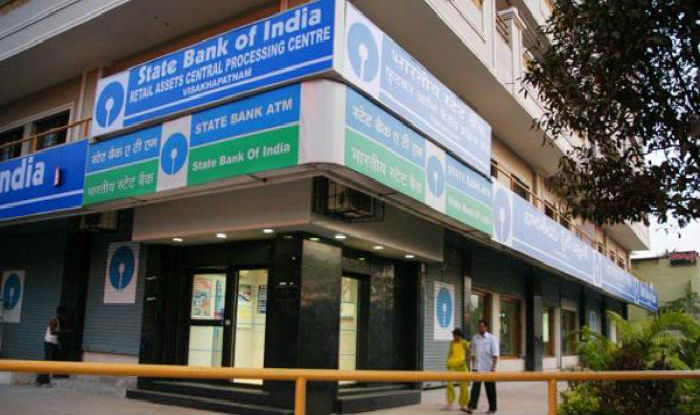
State Bank of India

Mumbai, Mar 1: The State Bank of India (SBI) on Wednesday steeply increased the bulk deposits rates for various maturities by up to 0.75 per cent with immediate effect. The pricing revision comes after three consecutive revisions in the rates by the lender on bulk term-deposits in the past three months.
Notably, any upward revision in the cost of funds automatically leads to a pricing revision in loans., under the present loan pricing mechanism that is based on the marginal cost of funds-based lending rates (MCLR).
For retail deposits, below Rs 1 crore, rates have been increased by up to 0.50 per cent, while for deposits maturing in one year to less than two years, the pricing has been raised by 0.15 per cent to 6.40 per cent from 6.25 per cent earlier.
All the new rates come into force immediately, the bank said in a statement.
SBI on Wednesday revised upwards the retail deposit rates for the two years to under 10 years bracket by 0.50 per cent to 6.50 per cent. The existing rate is 6 per cent at SBI.
It can be noted that the lender has in the past three months also revised upwards its bulk term deposit pricing in as many months.
For Rs 1 crore to Rs 10 crore bulk deposits, maturing in one year to less than two years, the bank had raised rates by 0.50 per cent from 6.25 per cent to 6.75 per cent. For the deposits in the two to less than three years maturity, the rates have been increased by 0.75 per cent to 6.75 per cent. For above Rs 10 crore bulk deposits maturing between one year and less than two years, the rates have been raised by 0.50 per cent to 6.75 per cent.
Rates for bulk deposits maturing between two to less than three years is increased by 0.75 per cent to 6.75 per cent.
(inputs from PTI)
Read More ->>

AICPIN for the month of January 2018

AICPIN for the month of January 2018
No.5/1/2018-CPI
GOVERNMENT OF INDIA
MINISTRY OF LABOUR & EMPLOYMENT
LABOUR BUREAU
`CLEREMONT’, SHIMLA-171004
DATED: 28th February, 2018
Press Release
Consumer Price Index for Industrial Workers (CPI-IW) — January, 2018
The All-India CPI-IW for January, 2018 increased by 2 points and pegged at 288 (two hundred and eighty eight). On 1-month percentage change, it increased by (+) 0.70 per cent between December, 2017 and January, 2018 when compared with the decrease of (-) 0.36 per cent for the corresponding months of last year.
The maximum upward pressure to the change in current index came from Housing group contributing (+) 3.99 percentage points to the total change. At item level, Goat Meat, Poultry (Chicken), Tea (Readymade), Pan Leaf, Doctor’s Fee, Medicine (Allopathic), Cinema Charges, Bus Fare, Petrol, Flowers/Flower Garlands, etc. are responsible for the increase in index. However, this increase was checked by Rice, Wheat & Wheat Atta, Gram Dal, Eggs (Hen), Fish Fresh, Onion, Brinjal Cabbage, Carrot, Cauliflower, French Bean, Gourd, Palak, Peas, Potato, Radish, Tomato, Sugar, etc., putting downward pressure on the index.
The year-on-year inflation measured by monthly CPI-IW stood at 5.11 per cent for January, 2018 as compared to 4.00 per cent for the previous month and 1.86 per cent during the corresponding month of the previous year. Similarly, the Food inflation stood at 3.36 per cent against 4.32 per cent of the previous month and 0.34 per cent during the corresponding month of the previous year.
At centre level, Nasik reported the maximum increase of (16 points) followed by Nagpur (11 points), Pune, Lucknow and Goa (10 points each), Kodarma and Amritsar (9 points each), and Coonoor, Agra and Chandigarh (8 points each). Among others, 7 points increase was observed in 3 centres, 6 points in 1 centre, 5 points in 5 centres, 4 points in 1 centre, 3 points in 6 centres, 2 points in 7 centres and 1 point in 8 centres. On the contrary, Quilon recorded a maximum decrease of 6 points followed by Siliguri and Madurai (5 points each). Among others, 4 points decrease was observed in 3 centres, 3 points in 7 centres, 2 points in 8 centres and 1 point in 10 centres. Rest of the 6 centres’ indices remained stationary.
The indices of 36 centres are above All-India Index and 40 centres’ indices are below national average. The index of Varanasi and Jabalpur centres remained at par with All-India Index. The next issue of CPI-IW for the month of February, 2018 will be released on Wednesday, 28th March, 2018. The same will also be available on the office website www.labourbureaunew.gov.in.
(ANIL KUMAR NEGI)
DEPUTY DIRECTOR
Read More ->>

Cabinet approves Amendments to Housing and Telephone Facilities Rules, Constituency Allowance Rules and Office Expense Allowance Rules for MPs

Cabinet approves Amendments to Housing and Telephone Facilities Rules, Constituency Allowance Rules and Office Expense Allowance Rules for MPs.
 28 FEB 2018
The Union Cabinet chaired by Prime Minister Shri Narendra Modi has approved Amendment to (i) The Housing and Telephone Facilities (Members of Parliament) Rules, 1956 (ii) The Members of Parliament (Constituency Allowance) Rules, 1986, (iii) The Members of Parliament (Office Expense Allowance) Rules, 1988. The details are:
Increase in the monetary ceiling of furniture at residence of Members of Parliament from Rs. 75,000/- (Rs. 60,000/- for durable and Rs. 15,000/- for non­durable) to Rs. 1,00,000/- (Rs. 80,000/- for durable and Rs. 20,000/- for non­durable) w.e.f. 01.04.2018 which shall be increased after every five years commencing from 01.04.2023 on the basis of Cost Inflation Index provided under clause (v) of Explanation to section 48 of the Income-tax Act, 1961.
Broadband internet facility may be provided to Members of Parliament w.e.f. August 2006 against 10,000 surrendered call units per annum on land line connection. The facility of broadband internet to Members of Parliament is already in practice since August, 2006 and it will now be incorporated in ‘the Housing and Telephone Facilities (Members of Parliament) Rules, 1956’ for its regularization through its amendment with retrospective effect by inserting a new rule.
Wi-fi zone with monthly tariff plan of Rs. 1700/- from 1.9.2015 to 31.12.2016 and Rs. 2200/- from 1.1.2017 onwards may be created in the Members’ residential areas for providing high speed internet connection (FTTH connection). This facility will be in addition to the existing broadband facility. For this purpose, three new sub-rules are to be inserted in ‘the Housing and Telephone Facilities (Members of Parliament) Rules, 1956’.
Increase in the Constituency Allowance for Members of Parliament from Rs. 45,000/- per month to Rs. 70,000/- per month w.e.f. 1.4.2018 which shall be increased after every five years commencing from 01.04.2023 on the basis of Cost Inflation Index provided under clause (v) of Explanation to section 48 of the Income-tax Act, 1961.
Increase in the Office Expense Allowance for Members of Parliament from Rs. 45,000/- per month (Rs. 15,000/- for expenses on stationary items and postage plus Rs. 30,000/- for a computer literate person engaged by Member of Parliament for obtaining secretarial assistance) to Rs. 60,000/- per month (Rs. 20,000/- for expenses on stationary items and postage plus Rs. 40,000/- for a computer literate person engaged by Member of Parliament for obtaining secretarial assistance) w.e.f. 01.04.2018 which shall be increased after every five years commencing from 01.04.2023 on the basis of Cost Inflation Index provided under clause (v) of Explanation to section 48 of the Income -tax Act, 1961.
The decision of the Cabinet shall be conveyed to the Joint Committee on Salaries and Allowances of Members of Parliament for making amendments in the relevant rules which shall be get approved and confirmed by the Chairman of the Council of States and the Speaker of House of the People and will be published in the Official Gazette.
Additional financial implication on account of the decision taken by the Cabinet would be Rupees 39,22,72,800/- (Rupees Thirty nine crores, twenty two lakhs, seventy two thousand & eight hundred) approximately of recurring expenditure and Rupees 6,64,05,400/- (Rupees Six crores, sixty four lakhs five thousand & four hundred) approximately of non-recurring expenditure.
Background:
Article 106 of the Constitution provides that the Members of either House
of Parliament shall be entitled to receive such salaries and allowances as may from time to time be determined by Parliament by law. Consequently, the Salary, Allowances and Pension of Members of Parliament Act (MSA Act) was enacted in 1954 (Act 30 of 1954). Section 9 of the MSA Act provides for constitution of a Joint Committee of both Houses of Parliament for the purpose of making rules under the Act. The Joint Committee has the powers to make rules after consultation with the Central Government to provide for all or any of the matters enumerated in the said section.
Source : PIB
Read More ->>

Finance Minister to inaugurate the Centralized GP Fund Module of PFMS for all the Central Government Employees and ePPO Module of PFMS for complete end –to –end electronic processing of Pension cases tomorrow

Finance Minister to inaugurate the Centralized GP Fund Module of PFMS for all the Central Government Employees and ePPO Module of PFMS for complete end –to –end electronic processing of Pension cases tomorrow

28 FEB 2018
On the occasion of 42nd Civil Accounts Day tomorrow, the Union Minister for Finance & Corporate Affairs , Shri Arun Jaitley will inaugurate the Centralized GP Fund Module of PFMS for all the Central Government Employees. The centralized GPF module meets a long standing demand of the Central Government Employees for a mapping of GPF Accounts with the unique Employee ID thereby facilitating online application for GPF advances and withdrawals with online access to the employee’s current GPF balances. The module will streamline GPF accounting and transfer of balances.
During the Inaugural Session, the Finance Minister, Shri Jaitley will also inaugurate the ePPO module of PFMS for complete end –to –end electronic processing of Pension cases. The ePPO includes the integration of the BHAVISHYA application of the Department of Pension & Pensioners’ Welfare and the PARAS application of CPAO with PFMS for seamless processing of Pension cases thereby eliminating delays and errors involved in manual processing.
A function is being organized tomorrow at D.S. Kothari Auditorium, DRDO Bhawan Complex, New Delhi to mark the 42nd Civil Accounts Day.
The Finance Minister, Shri Arun Jaitley will be the Chief Guest at the Inaugural Session. The Union Minister of State for Finance, Shri Pon. Radhakrishnan will preside over this Session. The Secretary (Expenditure), Shri A. N. Jha and the Controller General of Accounts(CGA), Shri Anthony Lianzuala will be the other dignitaries at the Inaugural Session.
It may be mentioned here that the Union Finance Minister, Shri Arun Jaitley had earlier graced the 40th Civil Accounts Day function on March 1, 2016 in which the Hon’ble President of India was the Chief Guest. The Union Finance Minister, Shri Jaitley had also very graciously inaugurated the ‘Mahalekha Niyantrak Bhawan’, the new building of this office on September 14, 2016.
Earlier, the Finance Minister had been kind enough to launch the mandatory use of PFMS for Central –Sector schemes monitoring (Oct 2015), the Non –Tax Receipts Portal (NTRP) (Feb 2016) and the Web Responsive Pensioners’ Service of the Central Pension Accounting Office (CPAO) (September 2016).
The Union Government initiated a major reform in Public Financial Management in 1976. The Audit and Accounts functions were separated by relieving the Comptroller and Auditor General of his responsibility of preparation of Union Government accounts. The accounting function was brought directly under the control of the Executive. Consequently, the Indian Civil Accounts Service (ICAS) was established. The ICAS was carved out from the Indian Audit & Accounts Service (IA & AS), initially through the promulgation of an Ordinance amending the C & AG’s (Duties, Powers and Conditions of Service) Amendment Act, 1976. Later on, the Departmentalization of Union Accounts (Transfer of Personnel) Act, 1976 was enacted by Parliament and assented to by Hon’ble President of India on 8th April, 1976. The Act was deemed to have come into force with effect from 1st March, 1976. Accordingly, the ICAS is celebrating March 1 every year as the “Civil Accounts Day”.
Since its inception the ICAS has steadily grown in stature and now plays an important role in the management of public finances of the Union Government
Other highlights of the 42nd Civil Accounts Day function are
* Inauguration of the Centralised GPF and ePPO modules of PFMS
Reforms in public financial management are a continuous process. Structural changes take place in the economy and in the functioning of government which demand accounting data on public finances to be available to decision makers, often on real time basis. This demand for faster information can only be met through adoption of technology. Recognizing this need, the Service has since its inception, been a pioneer in the use of Information Technology in Payments, Accounting and Financial Reporting.
* Keynote address by Shri N. K. Singh, Chairman, Fifteenth Finance Commission (FFC)
Shri N. K. Singh, Chairman, FFC will deliver the keynote address at the Plenary Session from 12.00 PM to 12.50 PM on the topic “Managing Public Finances for a resurgent India”. The Address will be of tremendous significance in the context of fiscal discipline efforts of the Union and the States that would be required to achieve fiscal consolidation.
* Address by Shri Rajnish Kumar, Chairman, State Bank of India
The post-lunch session (2:00 PM -2:50 PM) will feature a talk by Shri Rajnish Kumar, Chairman, State Bank of India on the topics “Leveraging Information Technology for an efficient receipt and payment system of the Government of India”. As the head of the premier accredited and aggregator bank for Government business, the views of Chairman, SBI on the subject would be of immense significance especially in the context of implementation of the Public Financial Management System (PFMS) with a seamless integration with the banking systems.
Concluding session
This Session will be an Open House Session where Service Officers will interact for a way forward on issues relating to Accounts, IT and Internal Audit.
Source : PIB
Read More ->>

Cabinet nod to hike MPs' allowances

Cabinet nod to hike MPs' allowances

NEW DELHI: Members of Parliament are set to get increased allowances with the Union Cabinet on Wednesday approving a proposal in this regard.

The constituency allowance, furniture allowance and communication expenses of the MPs would go up considerably, sources in the government said.

The parliamentary affairs ministry had proposed an increase in the constituency allowance from Rs 45,000 a month to Rs 60,000.

The ministry had also proposed that the one-time furniture allowance be hiked to Rs one lakh from the present Rs 75,000.

Finance minister Arun Jaitley had announced in his budget speech that a permanent mechanism would be set up to revise the salaries of MPs every five years, and it would be linked to inflation.

The remuneration of an MP includes a basic salary of Rs 50,000 per month and Rs 45,000 as constituency allowance, apart from other perks. The Centre spends around Rs 2.7 lakh a month on an MP.

As of today, excluding the Speaker, the Lok Sabha has 536 MPs, including two nominated from the Anglo-Indian community. There are eight vacancies.

The Rajya Sabha has 239 members.

Source:-The Times of India
Read More ->>

Placing of indent from so to psd for stock

Placing of indent from so to psd for stock

Read More ->>

Ditto installation procedure - updated

Ditto installation procedure - updated

Ditto installation procedure have been updated with mouse pointer too..

SBCO people need to generate lot of reports from FINACLE-MIS server ( Reports server ). In this connection, i have prepared, How to use Ditto for Reports generation.


Video Download link : https://youtu.be/7kTLG69_-98


Ditto is an extension to the standard windows clipboard. It saves each item placed on the clipboard allowing you access to any of those items at a later time. Ditto allows you to save any type of information that can be put on the clipboard, text, images, html, custom formats, 

Ditto - Features

  • Easy to use interface
  • Search and paste previous copy entries
  • Keep multiple computer's clipboards in sync
  • Data is encrypted when sent over the network
  • Accessed from tray icon or global hot key
  • Select entry by double click, enter key or drag drop
  • Paste into any window that excepts standard copy/paste entries
  • Display thumbnail of copied images in list
  • Full Unicode support(display foreign characters)
  • UTF-8 support for language files(create language files in any language)
  • Uses sqlite database
Invoke download by clicking below link

https://youtu.be/7kTLG69_-98

Ditto installation procedure..


after using "Ditto" software, we need to exit it from system tray every time .. 
Read More ->>