


Read More ->>
Thursday, 31 August 2017
POST OFFICE SAVINGS SCHEMES : AN ALTERNATE INVESTMENT AVENUE FOR THE RISK-AVERSE INVESTOR
POST OFFICE SAVINGS SCHEMES : AN ALTERNATE INVESTMENT AVENUE FOR THE RISK-AVERSE INVESTOR

Setting aside money in post office deposits are generally considered by many to be an extremely traditional way of saving cash.
However, over the last few years, post offices in India are more or less operating like any other commercial bank offering a wide range of savings, deposits and long-term investment plans to retail investors.
Besides the regular savings and recurring deposits, investors can choose from the multiple risk–free options that post offices offer, right from term deposits for the salaried class to senior citizens looking to receive moderate returns on their life savings.Let’s take a look at some of the post office offerings, features, and benefits to investors.
Term deposits:
Period: 1- 5 years
Category of investors Individual, Joint
Limits- Min. limit- Rs 200; Max limit- Not defined
Interest payable: Calculated quarterly and paid annually
Income tax benefit: 5- year TD’s are eligible for tax benefits under Section 80C of the IT Act.
Monthly Income Scheme (POMIS)-
Period Not available
Category of investors Individual, Joint
Limits Min. limit- In multiples of Rs 1500
Max limit- 4.5 lakhs (individuals); 9 lakhs (joint)
Interest payable Monthly
Income tax benefit Not applicable
Public Provident fund (PPF)-
Period 15 years
Category of investors Individual
Limits Min. limit- Rs 500; Max limit- Rs 150,000 per financial year
Interest Payable Compounded annually and paid on maturity
Income tax benefit Deposits are eligible for tax benefits under Section 80C of the IT Act.
National Savings Certificates (NSC)-
Period 5 years
Category of investors Individual
Limits Min. limit- In multiples of Rs 100; Max limit- Not defined
Interest Payable Compounded annually and paid on maturity
Income tax benefit Deposits are eligible for tax benefits under Section 80C of the IT Act.
Senior Citizens Savings Scheme (SCSS)-
Period 5 years
Category of investors Individual, Joint
Individual = > 60 years
Individual = > 55 years and < 60 years, retired under superannuation or VRS
Limits Min. limit- In multiples of Rs 1000; Max limit- 15 lakhs
Interest Payable Quarterly
Income tax benefit Deposits are eligible for tax benefits under Section 80C of the IT Act.
Kisan Vikas Patra (KVP)-
Period Can be encashed after 2.5 years
Category of investors Individual, Adults on behalf of minors
Limits Min. limit- Rs 1000; Max limit- Not defined
Interest Payable Compounded annually and paid on maturity
Income tax benefit Deposits are eligible for tax benefits under Section 80C of the IT Act.
Sukanya Samriddhi Yojana (SSA)-
Period Until the child completes 21 years
Category of investors Individual, Adults on behalf of minors
Limits Min. limit- Rs 1000; Max limit- Rs 150,000/ financial year
Interest Payable Compounded annually
Post Office Schemes are a good alternative to banks for risk averse investors, as they offer a wide range of products for different classes of investors. With interest rates in India declining steadily, the return on investment from these schemes will barely beat inflation.
Short- medium term investments in post office savings are acceptable as interest received from these savings instruments can be measured in terms of income growth.However, investors considering long-term capital growth in addition to income growth will need to look at other forms of investments in addition to the ones offered by post offices.
Source:-http://www.moneycontrol.comRead More ->>
Wednesday, 30 August 2017
Suggestions related to Welfare Schemes : DOP
Suggestions related to Welfare Schemes : DOP


Read More ->>
Aadhaar mandatory: Deadline will now be December 31
Aadhaar mandatory: Deadline will now be December 31
The deadline for Aadhaar being mandatory would be extended to December 31, the Centre has told the Supreme Court. The SC is hearing a batch of petitions challenging the decision of the government to make Aadhaar mandatory. The Centre said that at present the deadline for making Aadhaar mandatory was September 31.

However it added that it was willing to extend the deadline to December 31. This was informed to a Bench headed by Chief Justice of India Dipak Misra by Attorney General, K K Venugopal.
This information was given by the Centre after the petitioners had sought for an early hearing of the matter. The petitioners also quoted the recent decision of the Supreme Court which had said Right to Privacy is a fundamental right. The Attorney General also asked the CJI to list the matter before a five judge Constitution Bench instead of a 3 judge Bench. The court while taking note of the petitioners' request agreed to post the matter for hearing in the first week of November.
OneIndia News
The deadline for Aadhaar being mandatory would be extended to December 31, the Centre has told the Supreme Court. The SC is hearing a batch of petitions challenging the decision of the government to make Aadhaar mandatory. The Centre said that at present the deadline for making Aadhaar mandatory was September 31.
However it added that it was willing to extend the deadline to December 31. This was informed to a Bench headed by Chief Justice of India Dipak Misra by Attorney General, K K Venugopal.
This information was given by the Centre after the petitioners had sought for an early hearing of the matter. The petitioners also quoted the recent decision of the Supreme Court which had said Right to Privacy is a fundamental right. The Attorney General also asked the CJI to list the matter before a five judge Constitution Bench instead of a 3 judge Bench. The court while taking note of the petitioners' request agreed to post the matter for hearing in the first week of November.
OneIndia News
Read More ->>
Function 7 days in a month in city: HC to CAT
Function 7 days in a month in city: HC to CAT
NAGPUR: In a big relief to lawyers and litigants fighting cases related to Union government's jobs, the Nagpur bench of Bombay High Court on Monday directed the Central Administrative Tribunal's (CAT) registry to continue its interim order of sitting for a week in Nagpur at least once in a month.
A division bench comprising justices Bhushan Dharmadhikari and Arun Upadhye also asked the centre to take decision on petitioner's representation of demanding permanent CAT bench in the city, having jurisdiction of Khandesh, Vidarbha and Central India, within six weeks.
Before disposing off the PIL by CAT Bar Association at Nagpur and its secretary Anil Bambal through counsels — Mohan and Akshay Sudame, the court granted liberty to the petitioners to re-approach if directives were not complied with by the respondents.
CAT was established on October 2, 1985, with a view to resolve disputes of central government employees at Delhi, Mumbai, Kolkata and Allahabad. Later it was expanded to 33 benches while circuit sittings are conducted in other major cities.
These sittings were initially held at alternate months in the city, but later its periodicity was reduced and quarterly sitting was held to adjudicate the cases. Subsequently, even those were discontinued and there was no sitting from April to December in 2014.
The petitioners contended that on account of irregular sittings, pendency of cases jumped from 337 in 2007 to 641 by the end of 2014. On an average, about 250-300 cases are filed at Nagpur every year. Due to irregular sittings of CAT bench, the pendency of cases has jumped.
Explaining the plight of people from Vidarbha, who had to travel 850 kms to Mumbai for their cases due to irregular CAT sittings, the petitioners argued that not all could afford frequent travel, especially the class-III and IV staffers.
The usual practice is that if an interim order is granted, matter is fixed immediately after 15 days for their speedy disposal such as transfer. Though a large number of cases is pending before the tribunal for last several years, the circuit sitting is being held only for a week in two months.
They pointed out that since large number of the central offices is operating in the city recruiting thousands of employees, it is perfect place to establish the permanent CAT bench. They included — Income Tax, Central Excise and Customs, Accountant General, Geological Survey of India, Indian Bureau of Mines, Metrological Department, Railways, Department of Posts, Director of Accounts (Posts), Archaeological Survey of India, Central Public Works Department, Survey of India, Central Government Health Scheme, Mines Safety Department and several others.
Read More ->>
RECOVERY OF WRONGFUL / EXCESS PAYMENTS MADE TO GOVERNMENT SERVANTS
No.18/03/2015-Estt. (Pay-I)
Government of India
Ministry of Personnel, Public Grievances & Pensions
Department of Personnel & Training
New Delhi, the 2nd March, 2016
OFFICE MEMORANDUM
Sub: Recovery of wrongful / excess payments made to Government servants.
The undersigned is directed to refer to this Department’s OM No.18/26/2011-Estt (Pay-I) dated 6th February, 2014 wherein certain instructions have been issued to deal with the issue of recovery of wrongful / excess payments made to Government servants in view of the law declared by Courts, particularly, in the case of Chandi Prasad Uniyal And Ors. vs. State of Uttarakhand And Ors., 2012 AIR SCW 4742, (2012) 8 SCC 417. Para 3(iv) of the OM inter-alia provides that recovery should be made in all cases of overpayment barring few exceptions of extreme hardships.
2. The issue has subsequently come up for consideration before the Hon’ble Supreme Court in the case of State of Punjab & Ors vs Rafiq Masih (White Washer) etc in CA No.11527 of 2014 (Arising out of SLP(C) No.11684 of 2012) wherein Hon’ble Court on 18.12.2014 decided a bunch of cases in which monetary benefits were given to employees in excess of their entitlement due to unintentional mistakes committed by the concerned competent authorities, in determining the emoluments payable to them, and the employees were not guilty of furnishing any incorrect information / misrepresentation / fraud, which had led the concerned competent authorities to commit the mistake of making the higher payment to the employees. The employees were as innocent as their employers in the wrongful determination of their inflated emoluments. The Hon’ble Supreme Court in its judgment dated 18 th December, 2014 ibid has, inter-alia, observed as under:
“7. Having examined a number of judgments rendered by this Court, we are of the view, that orders passed by the employer seeking recovery of monetary benefits wrongly extended to employees, can only be interfered with, in cases where such recovery would result in a hardship of a nature, which would far outweigh, the equitable balance of the employer’s right to recover. In other words, interference would be called for, only in such cases where, it would be iniquitous to recover the payment made. In order to ascertain the parameters of the above consideration, and the test to be applied, reference needs to be made to situations when this Court exempted employees from such recovery, even in exercise of its jurisdiction under Article 142 of the Constitution of India. Repeated exercise of such power, “for doing complete justice in any cause” would establish that the recovery being effected was iniquitous, and therefore, arbitrary. And accordingly, the interference at the hands of this Court.”
“10. In view of the afore-stated constitutional mandate, equity and good conscience, in the matter of livelihood of the people of this country, has to be the basis of all governmental actions. An action of the State, ordering a recovery from an employee, would be in order, so long as it is not rendered iniquitous to the extent, that the action of recovery would be more unfair, more wrongful, more improper, and more unwarranted, than the corresponding right of the employer, to recover the amount. Or in other words, till such time as the recovery would have a harsh and arbitrary effect on the employee, it would be permissible in law. Orders passed in given situations repeatedly, even in exercise of the power vested in this Court under Article 142 of the Constitution of India, will disclose the parameters of the realm of an action of recovery (of an excess amount paid to an employee) which would breach the obligations of the State, to citizens of this country, and render the action arbitrary, and therefore, violative of the mandate contained in Article 14 of the Constitution of India.”
3. The issue that was required to be adjudicated by the Hon’ble Supreme Court was whether all the private respondents, against whom an order-of recovery (of the excess amount) has been made, should be exempted in law, from the reimbursement of the same to the employer. For the applicability of the instant order, and the conclusions recorded by them thereinafter, the ingredients depicted in paras 2&3 of the judgment are essentially indispensable.
4. The Hon’ble Supreme Court while observing that it is not possible to postulate all situations of hardship which would govern employees on the issue of recovery, where payments have mistakenly been made by the employer, in excess of their entitlement has summarized the following few situations, wherein recoveries by the employers would be impermissible in law:-
(i) Recovery from employees belonging to Class-III and Class-IV service (or Group ‘C’ and Group ‘D’ service).
(ii) Recovery from retired employees, or employees who are due to retire within one year, of the order of recovery.
(iii) Recovery from employees, when the excess payment has been made for a period in excess of five years, before the order of recovery is issued.
(iv) Recovery in cases where an employee has wrongfully been required to discharge duties of a higher post, and has been paid accordingly, even though he should have rightfully been required to work against an inferior post.
(v) In any other case, where the Court arrives at the conclusion, that recovery if made from the employee, would be iniquitous or harsh or arbitrary to such an extent, as would far outweigh the equitable balance of the employer’s right to recover.
5. The matter has, consequently, been examined in consultation with the Department of Expenditure and the Department of Legal Affairs. The Ministries / Departments are advised to deal with the issue of wrongful / excess payments made to Government servants in accordance with above decision of the Hon’ble Supreme Court in CA No.11527 of 2014 (arising out of SLP (C) No.11684 of 2012) in State of Punjab and others etc vs Rafiq Masih (White Washer) etc. However, wherever the waiver of recovery in the above-mentioned situations is considered, the same may be allowed with the express approval of Department of Expenditure in terms of this Department’s OM No.18/26/2011-Estt (Pay-I) dated 6th February, 2014.
6. In so far as persons serving in the Indian Audit and Accounts Department are concerned, these orders are issued with the concurrence of the Comptroller and Auditor General of India.
7. Hindi version will follow.
sd/-
(A.K.Jain)
Deputy Secretary to the Government of India
Authority :www.persmin.gov.in
Read More ->>
Tuesday, 29 August 2017
Rs 1,000 Notes Won’t be Re-introduced, Clarifies Government
Rs 1,000 Notes Won’t be Re-introduced, Clarifies Government
The RBI had last week launched the Rs 200 denomination banknotes in the Mahatma Gandhi (New) series bearing the signature of RBI Governor Urjit Patel.
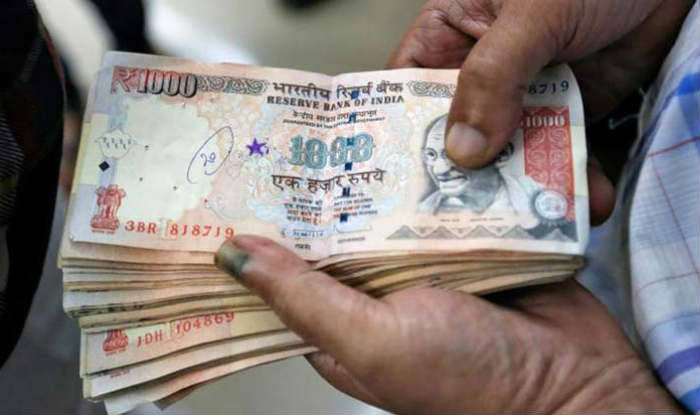
New Delhi, August 30: The government does not plan to reintroduce Rs 1,000 notes that were taken out of circulation by the demonetisation of high-value currency last November, a senior official said on Tuesday.
“There is no proposal to reintroduce Rs 1000 note,” Economic Affairs Secretary Subhash Chandra Garg said in a tweet.
On Friday, the Reserve Bank of India (RBI) launched the Rs 200 denomination banknotes in the Mahatma Gandhi (New) series bearing the signature of RBI Governor Urjit Patel. These were issued by select RBI offices and some banks.
The note has the motif of the Sanchi Stupa on the reverse while its base colour is bright yellow.
The move is aimed at increasing the circulation of smaller denomination notes.
The RBI said the introduction of new denomination and design is done keeping in mind factors like ease of transactions, replacement of soiled banknotes, inflation and the need to check counterfeiting.
Noting that the optimal system of denominations of currency is one that minimises their number “and concurrently increase the probability of proffering exact change”, the central bank said that “in the lower end of the denomination series, Rs 200 is the missing one”.
“There is a logical need to introduce the missing denomination of Rs 200, which will make the present currency system more efficient.”
The RBI also said the supply of Rs 200 notes will soon be ramped up across the country through banking channels.
This is published unedited from the IANS feed.
Read More ->>
Fee for default in furnishing return of income
Fee for default in furnishing return of income
For the current financial year (2017-18), a new late fee has been introduced for late filing of Income Tax return.
Fee for default in furnishing return of income.
234F.
(1) Without prejudice to the provisions of this Act, where a person required to furnish a return of income under section 139, fails to do so within the time prescribed in sub-section (1) of the said section, he shall pay, by way of fee, a sum of,—
(a) five thousand rupees, if the return is furnished on or before the 31st day of December of the assessment year;
(b) ten thousand rupees in any other case:
Provided that if the total income of the person does not exceed five lakh rupees, the fee payable under this section shall not exceed one thousand rupees.
(2) The provisions of this section shall apply in respect of return of income required to be furnished for the assessment year commencing on or after the 1st day of April, 2018.
Read More ->>
Minutes of the 12th meeting of Postal Services Staff Welfare Board held on 22.08.2017 at New Delhi


Read More ->>

 →


